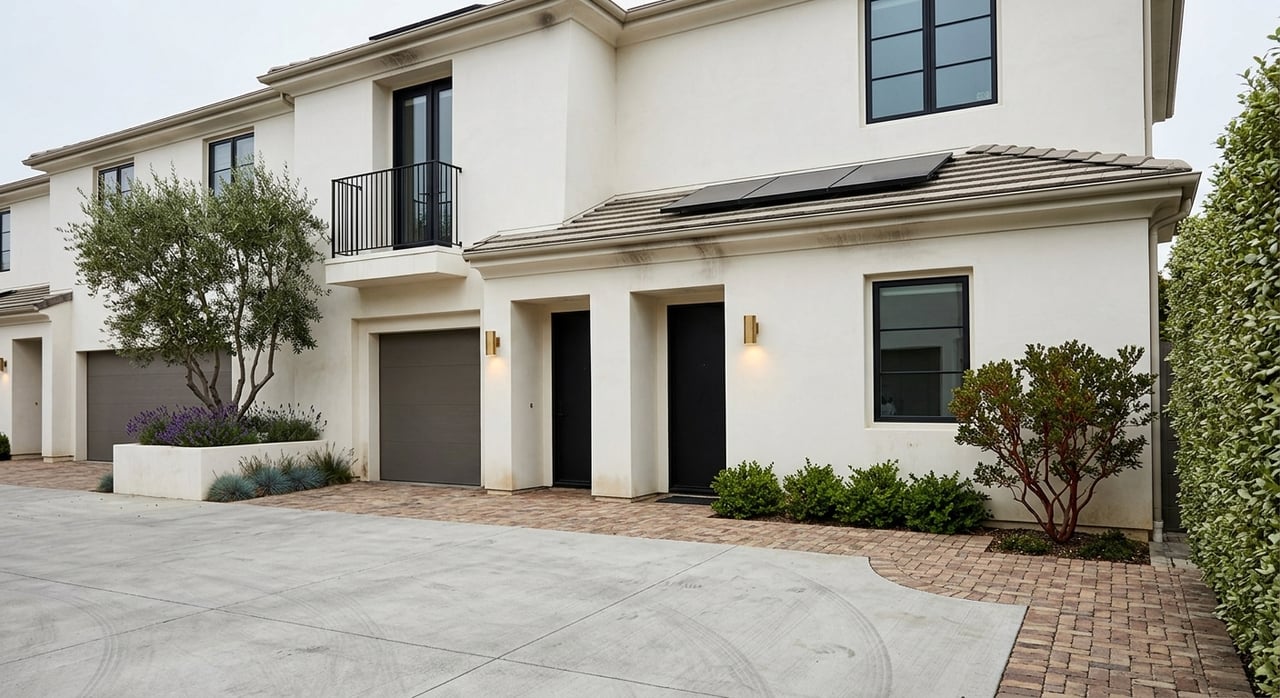
Wondering whether a condo or townhome is the right way to buy into San Mateo? You are not alone. In a city where price, commute, parking, and lifestyle all pull in different directions, attached-home living can offer a practical path, but the right fit depends on how you want to live day to day. This overview will help you compare San Mateo condo and townhome living, understand where these homes tend to cluster, and know what to review before you buy. Let’s dive in.
San Mateo Attached Homes at a Glance
San Mateo had 105,661 residents in the 2020 Census, and the city stands out on the Peninsula for having three Caltrain stations and strong regional connectivity. That matters if you are looking at a condo or townhome and want to balance homeownership with easier access to work, shopping, dining, and public spaces.
The local price spread also helps explain why many buyers focus on attached homes first. Census QuickFacts reports a 2020 to 2024 median owner-occupied home value of $1,618,700. Redfin reports a median sale price of $2,218,872 for single-family homes, compared with $1,500,295 for townhouses and $749,716 for condo and co-op homes.
That gap is often the starting point for your decision. If a detached home feels out of reach, a condo or townhome may open the door to San Mateo ownership while still keeping you close to major transit and city amenities.
Why Buyers Consider Condos and Townhomes
For many buyers, attached living is a tradeoff that can make a lot of sense. You may get a lower entry price than a single-family home, a more central location, and less private exterior upkeep. In return, you usually take on HOA dues, shared rules, and common-area decision-making.
In San Mateo, that tradeoff can be especially appealing because many attached-home areas are close to transit, commercial districts, and parks. If your lifestyle leans toward convenience and connectivity, a condo or townhome may line up well with your priorities.
Where Condos and Townhomes Cluster in San Mateo
San Mateo’s attached-home market is not all the same. Some areas feel more urban and walkable, while others feel more planned and transit-oriented. Understanding that difference can help you narrow your search faster.
Downtown San Mateo Condos
Downtown San Mateo is the clearest urban-style attached housing area in the city. The city’s Downtown Area Plan encourages mixed-use and higher-density residential development in the downtown retail core, which it defines between 1st and 5th Avenues from El Camino Real to the railroad.
This part of San Mateo offers a more active street setting. Caltrain notes that the San Mateo Station on B Street gives riders quick access to restaurants, bars, and shops, and places Central Park, the Japanese tea garden, and the library within a short walk.
The city’s permanent outdoor-dining program also supports that pedestrian-oriented feel on B Street and in other commercial districts. If you want a condo near dining, errands, and train access, downtown is often the most urban-feeling option in San Mateo.
Rail Corridor Communities
Outside downtown, San Mateo has also planned transit-oriented districts around the rail corridor. The city’s TOD planning focuses on areas within about a half-mile of Downtown, Hillsdale, and Hayward Park Caltrain stations.
These areas often appeal to buyers who want attached housing with a little more of a planned-community feel. You may find the setting less centered on a traditional downtown street grid and more centered on mixed-use development, transit access, and connected pedestrian routes.
Hillsdale and Bay Meadows Style Living
The Hillsdale Station Area Plan is designed to support transit, walking, and bicycling through mixed-use development. It also includes station-area parking rules and requires trip-reduction and parking-management planning for new development.
Bay Meadows adds another version of this lifestyle. The city notes public streets, parks, and other public benefits tied to the area’s development, and buyers often see this part of San Mateo as a suburban-style townhome or planned-community setting that still stays close to transit.
Condo vs Townhome Living in San Mateo
If you are comparing a condo with a townhome, the choice often comes down to layout, price, and how much shared infrastructure you are comfortable with. In broad terms, condos tend to be the more affordable entry point, while townhomes often offer more separation and a layout that feels closer to a detached home.
That said, the real decision is often more practical than theoretical. In San Mateo, parking setup, HOA health, location near transit, and the quality of shared amenities may matter just as much as square footage.
| Home type |
Typical appeal |
Key tradeoff |
| Condo |
Lower entry price, central locations, less exterior upkeep |
More shared walls, HOA rules, dues |
| Townhome |
More space and separation, often a more house-like layout |
Higher price than many condos, HOA structure still applies |
What Daily Life Can Feel Like
In California, condos and many townhomes are commonly part of a common-interest development, or CID. The California Department of Real Estate says these communities can include two-story townhouses, garden-style units, and apartment-like high rises, and that buying into one means automatic membership in the homeowners association.
That structure affects daily life more than many buyers expect at first. The CC&Rs typically define common-area responsibilities, assessments, insurance, and architectural controls, while the HOA board manages budgets, bills, and rule enforcement.
In simple terms, you often trade private exterior maintenance for shared governance. That can be a great fit if you value convenience, but it also means you should feel comfortable with dues, community standards, and how decisions get made.
Parking Matters More Than You Think
Parking can be one of the biggest differences between two homes that otherwise seem similar. Caltrain notes that parking at some popular express stations can be scarce, and the Hillsdale area uses station-area parking standards and management planning tied to new development.
That is why it is smart to check parking details unit by unit instead of making assumptions. One community may offer assigned spaces and guest parking, while another may lean more heavily on transit access and provide less parking overall.
When you review a listing, it helps to ask about:
- Assigned parking spaces
- Guest parking availability
- Storage areas
- EV charging rules or availability
- Whether parking is deeded, shared, or subject to HOA rules
Parks, Transit, and Public Life
One of the strongest upsides of San Mateo condo and townhome living is access to public amenities. The city says its parks system provides about 200 acres of open space, which can add real value if your home has less private outdoor area.
Downtown also benefits from quick access to Central Park and the Japanese tea garden, both highlighted by Caltrain’s downtown station information. For buyers who enjoy being out and about, these nearby public spaces can help balance the smaller footprint that sometimes comes with attached living.
The same goes for street life and transit access. If you want to be near restaurants, shops, and commuter options, San Mateo offers several attached-home areas where that convenience is part of the appeal.
What to Review Before You Buy
Attached-home purchases require a closer look at the HOA and disclosure package. In California, Civil Code 4525 requires sellers of common-interest homes to provide key documents, including governing documents, budget disclosures, current assessments, unpaid charges, recent violation notices, rental-restriction notices, board minutes if requested, the latest inspection report, and notice of approved assessment changes.
Civil Code 5300 also requires the annual budget report to include the operating budget, reserve summary, reserve funding plan, certain statements about deferred repairs or special assessments, loans, insurance summaries, and FHA or VA status for condominium projects. Civil Code 5550 requires reserve studies to inspect major components at least every three years and be reviewed annually.
These documents help you look beyond the unit itself. A beautiful kitchen matters, but so do reserves, maintenance planning, and whether the HOA is managing the property in a stable way.
Key HOA Questions to Ask
Some of the most important buyer questions are the least glamorous ones. They can save you from surprises after closing.
Ask about:
- Reserve strength
- Whether repairs have been deferred
- The chance of a special assessment
- Rental restrictions
- Pet rules
- Parking restrictions
- Insurance coverage and deductible exposure
- Recent rule violations or ongoing disputes
The California Department of Real Estate specifically advises buyers to study governing documents carefully and remember that assessments fund the operation and maintenance of common facilities. That is a useful reminder if monthly dues seem high at first glance. Sometimes the better question is what those dues cover, and whether the community is planning responsibly.
How to Frame Your Decision
A helpful way to think about San Mateo attached living is that you are not choosing from one single market. You are choosing between different living patterns.
Downtown condos often fit buyers who want the most urban and walkable setting. Rail-corridor and Bay Meadows style communities often fit buyers who want a more planned and transit-oriented environment. Across both, HOA quality, parking setup, and reserve health may matter just as much as the floor plan.
If you are buying in San Mateo, the right choice usually comes from matching the home to your routine. Think about how often you use transit, how important parking is, how comfortable you are with HOA rules, and whether you want more street activity or more of a planned-community feel.
Whether you are buying your first condo, comparing a townhome to a detached home, or preparing to sell an attached property on the Peninsula, working with a local guide can make the details much easier to sort through. If you want help evaluating San Mateo condos, townhomes, pricing, or resale strategy, connect with Fadi Shamieh.
FAQs
What is the price difference between condos, townhomes, and single-family homes in San Mateo?
- Redfin reports median sale prices of $749,716 for condo and co-op homes, $1,500,295 for townhouses, and $2,218,872 for single-family homes in San Mateo.
Where are the main condo and townhome areas in San Mateo?
- Downtown San Mateo is the most urban-style attached-home area, while transit-oriented districts near Downtown, Hillsdale, and Hayward Park, including Bay Meadows-style communities, are key areas for planned and transit-connected attached housing.
What should buyers review in a San Mateo HOA document package?
- Buyers should review the governing documents, budget disclosures, assessments, reserve information, inspection reports, rule notices, rental restrictions, insurance summaries, and any approved assessment changes required under California resale disclosure rules.
What is daily life like in a San Mateo condo or townhome community?
- Daily life often includes less private exterior maintenance, shared common areas, HOA dues, community rules, and varying levels of access to transit, parks, dining, and parking depending on the location.
Why is parking important when buying a San Mateo condo or townhome?
- Parking can vary widely by property, and some transit-oriented areas may prioritize access to Caltrain, walking, and biking over larger parking supply, so buyers should verify assigned spaces, guest parking, storage, and EV charging rules for each unit.