Thinking about adding a backyard cottage or converting space into an ADU in Pacifica? You are not alone. Many local homeowners want more room for family, flexible rental income, or a future‑ready floor plan. This guide gives you clear, practical steps so you can plan with confidence and avoid costly surprises. You will learn what is typically allowed, how permits work, and what to double‑check in a coastal city like Pacifica. Let’s dive in.
ADU basics and state rules
California has pushed to make ADUs easier to build. A set of state laws from 2019 and later (including AB 68, SB 13, AB 881, and AB 670) streamlined permitting and limited local barriers. Here is what that means for you:
- Most ADUs are reviewed ministerially. That means objective standards apply, and no public hearing is required in typical cases.
- ADU types include detached, attached, conversion ADUs, and Junior ADUs (JADUs made from existing space).
- JADUs are typically up to 500 sq ft and come from your home’s existing footprint. Owner‑occupancy is usually required for a JADU.
- Many California cities allow detached ADUs up to 1,200 sq ft, but each city applies its own objective standards within state limits. Plan to confirm Pacifica’s exact size rules before you design.
- State law restricts local parking requirements. In many cases no new parking can be required, especially if you are within one half mile of transit or converting a garage. Replacement parking cannot be required for a garage conversion.
- Fees and impact fees must be proportionate. Smaller ADUs can see reduced impact fees under state rules, though you should verify Pacifica’s current fee schedule.
State law sets the floor. Pacifica can apply clear, objective standards for things like setbacks, height, and placement as long as they do not block ADU development.
What to check first in Pacifica
Pacifica’s coastal setting adds a few important checks before you hire a designer or builder:
- Confirm your zoning and ADU allowances with the City of Pacifica Planning Division.
- Ask if your property is inside the Coastal Zone. Many parts of Pacifica are, and a Coastal Development Permit or consistency review may apply.
- Review any overlays or hazards such as steep slopes, geologic stability, or bluff areas that could trigger geotechnical studies.
- Verify utility capacity for water and sewer. Check with the water district and the local sewer provider about connection needs and potential fees.
- If you have an HOA or CC&Rs, review private rules that may limit exterior changes.
A quick pre‑application conversation with Planning can save weeks later.
ADU and JADU types you can consider
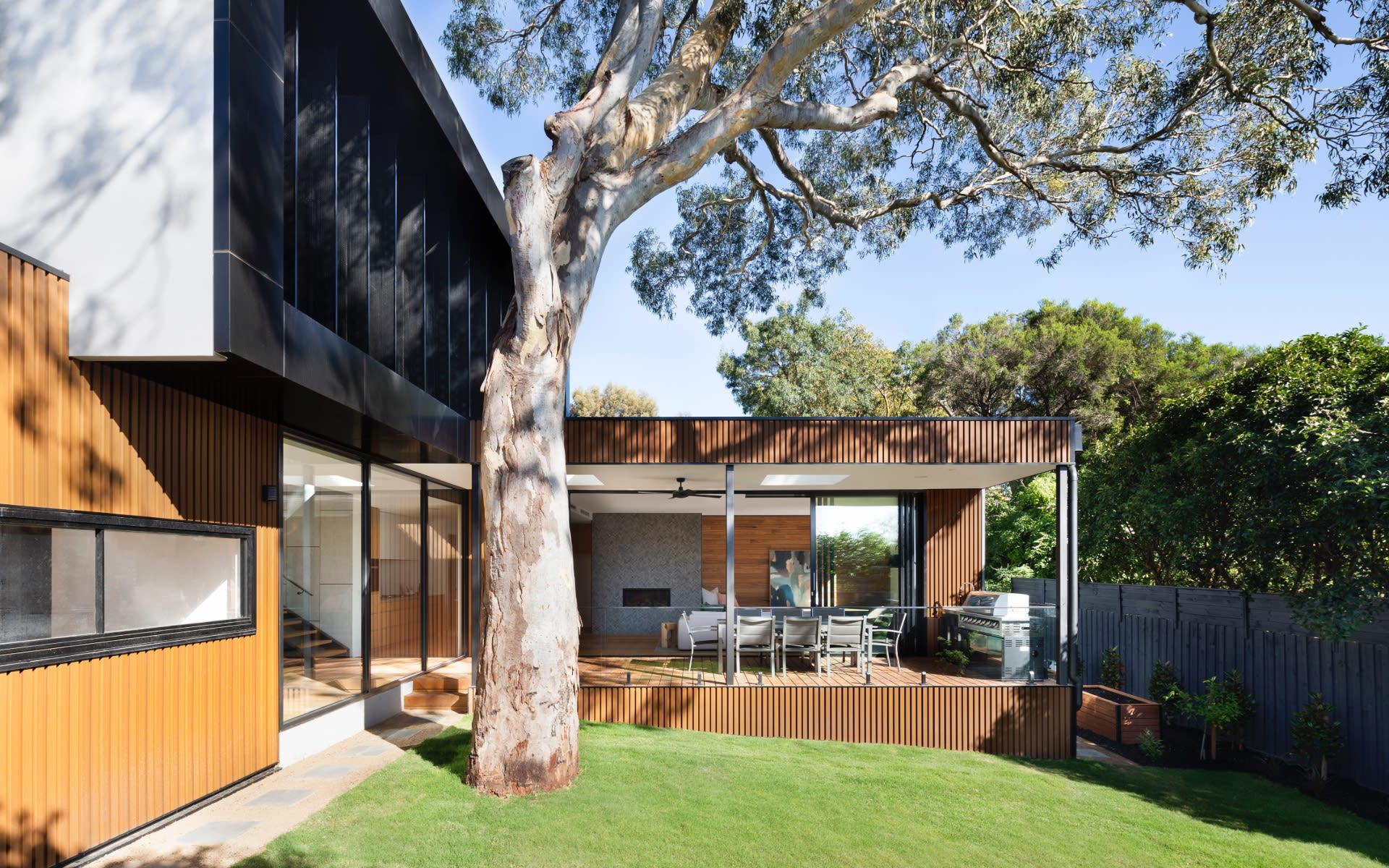
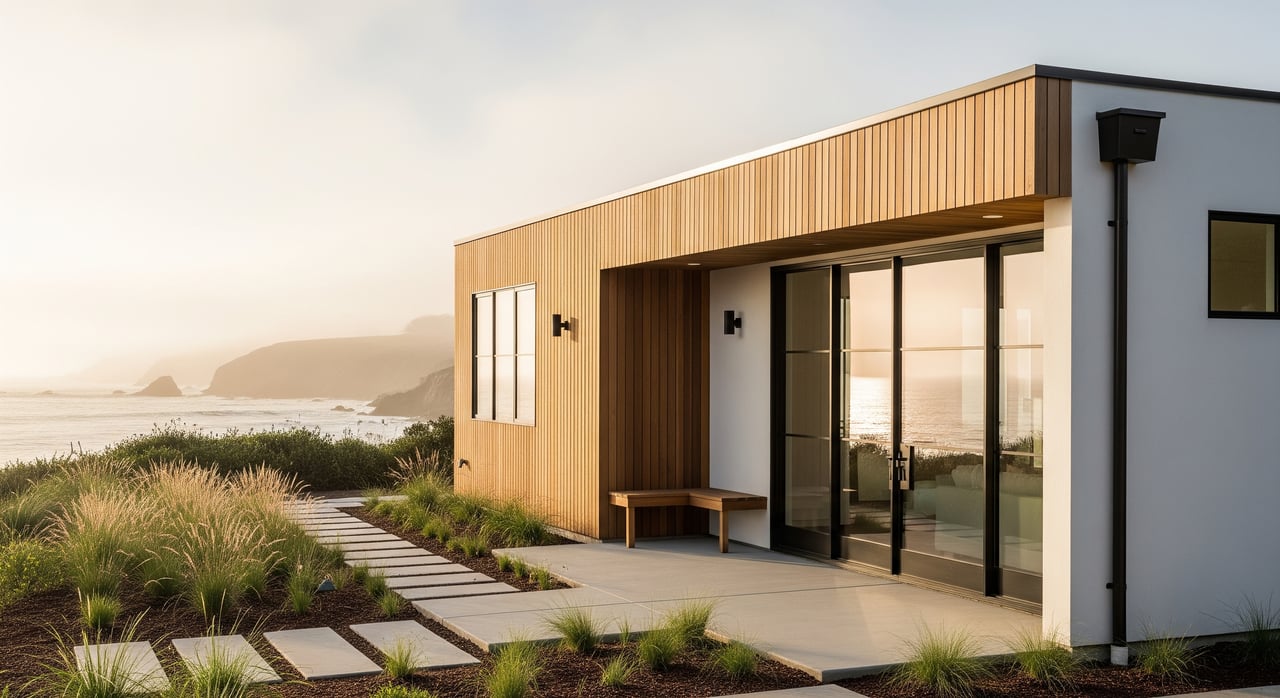
- Detached ADU. A separate small home in your yard. Many cities allow up to 1,200 sq ft, but you should confirm Pacifica’s local cap and any height limits.
- Attached ADU. An addition connected to your existing home.
- Conversion ADU. Built within existing space such as a garage, attic, basement, or accessory building.
- Junior ADU (JADU). Up to 500 sq ft created from existing space inside your single‑family home. A JADU often requires the owner to live in the main home.
Each type has different placement, structural, and utility implications. Your lot layout and setbacks often make the decision for you.
Setbacks, height, and placement
Expect objective standards that address where an ADU can go and how tall it can be. Common patterns you may see in Pacifica include:
- Reduced rear or side setbacks for a detached ADU compared with a main house.
- Height caps that keep new structures in scale with the neighborhood.
- Clear rules on distance from property lines, utility easements, and the main house.
- Fire access and exterior egress requirements, which can affect door locations and pathways.
Ask Planning how ADU square footage counts toward lot coverage or floor‑area ratio. Some cities treat detached ADUs differently for coverage calculations.
Parking rules you should know
Parking is one of the biggest myths about ADUs. Under state law, Pacifica cannot require replacement parking if you convert a garage. In many cases no additional parking is required if:
- The ADU is within one half mile of public transit.
- The ADU is created from existing space like a garage or carport.
- The ADU is in certain historic areas or is deed‑restricted as affordable housing.
If new parking is required, Pacifica will explain acceptable solutions, such as tandem spaces or on‑street allowances if permitted. Public Works may need to approve new driveway openings or curb changes.
Owner‑occupancy and rental rules
State law narrowed local owner‑occupancy requirements for ADUs. JADUs typically still require owner‑occupancy. For rentals, confirm Pacifica’s rules on short‑term stays and minimum lease lengths. Many cities allow only long‑term rentals for ADUs. Always verify what is current before you plan for rental income.
Utilities, water, and sewer connections
Every ADU project needs a plan for water, sewer, and power. Before you finalize design:
- Check if your ADU can share existing meters or if separate meters are required.
- Ask the water district and sewer provider about connection capacity and fees.
- If you are on septic or a private well, consult San Mateo County Environmental Health. Septic capacity can be a limiting factor.
- Plan for trenching routes to avoid tree roots and reduce costs.
Utility planning affects cost and schedule. Address it early.
Coastal Zone and hazard considerations
Pacifica’s shoreline location means many homes sit inside the Coastal Zone. If yours does, the city may require a Coastal Development Permit or a consistency review. This review adds process steps and can extend timelines. Homes on steep slopes, in landslide areas, or near bluffs may need geotechnical reports and engineered solutions. If you suspect any hazard, ask Planning what studies are required so you can budget and schedule accordingly.
Permitting steps and timeline in Pacifica
Most ADU projects follow a ministerial pathway with clear submittals and reviews:
- Pre‑application check with Planning. Confirm zoning, setbacks, and whether the property is in the Coastal Zone.
- Prepare your application. Typical plans include a site plan, floor plans, elevations, structural details for a detached unit, and a utility plan. Add grading or drainage plans if needed.
- Submit for Planning review and Building plan check. Planning confirms objective standards. Building reviews structural, energy, and life‑safety codes.
- Coastal review if required. This is a separate step that can extend the schedule.
- Permit issuance and inspections. Construction proceeds with staged inspections until final occupancy.
Typical timing varies by complexity and completeness:
- Simple conversion or small detached ADU: plan review can take a few weeks to a few months.
- With coastal permits or geotechnical reports: expect a longer path.
- Overall, many projects move from application to permits in 2 to 6 months, then construction adds several more months depending on scope.
Budget and cost ranges
Costs depend on size, site work, and finishes. Local quotes will refine these numbers, but common ranges are:
- Interior conversion, such as a garage or attic: about $30,000 to $120,000.
- Detached ADU of about 400 to 800 sq ft: about $150,000 to $350,000 or more.
- City fees and impact fees: from a few hundred to several thousand dollars, depending on size and services.
These are ballparks, not bids. Complex sites, utility trenching, or coastal requirements can increase costs.
Quick feasibility checklist
Use this list to stress‑test your idea before you commit to design work:
- Confirm your zoning allows ADUs or JADUs.
- Ask if your property is in the Coastal Zone and whether a Coastal Development Permit is needed.
- Map setbacks and possible ADU locations on a site plan.
- Note any slopes, retaining walls, or known soil issues that could trigger geotechnical review.
- Plan utility routes for water, sewer, and power.
- Review parking needs and whether a state exemption applies.
- Check HOA or CC&Rs for any private restrictions.
- Confirm fire access and exterior egress paths.
Common pitfalls to avoid
- Assuming parking will be required. You may qualify for an exemption, especially if converting a garage.
- Overlooking the Coastal Zone. Coastal review can add steps and time.
- Ignoring HOA or CC&Rs. Private rules can limit exterior changes even if the city allows an ADU.
- Underestimating utility costs. Sewer laterals, trenching, and meter work can add up.
- Skipping structural and code checks. Older garages often need seismic and foundation upgrades.
- Forgetting drainage. Sloped lots may need stormwater or grading plans.
Your best next steps
- Call the City of Pacifica Planning Division to verify zoning, setbacks, and Coastal Zone status.
- Request the city’s ADU application packet and current fee schedule.
- Speak with your water and sewer providers about connection needs and costs.
- If in a hazard area, ask Planning what studies you need so you can budget accurately.
- Get at least two local design‑build or contractor estimates to compare scope and timelines.
If you want a local perspective on resale value, rental strategy, or which improvements will help most when you sell, our team is happy to help.
Ready to map out your ADU plan or explore how an ADU could impact your home’s value? Reach out to Fadi Shamieh for local guidance and a friendly, no‑pressure conversation.
FAQs
What is an ADU in Pacifica?
- An ADU is a secondary home on your lot that can be detached, attached, or created from existing space, with most permits processed through a ministerial review using objective standards.
How big can a Pacifica ADU be?
- Many California cities allow detached ADUs up to 1,200 sq ft, while JADUs are typically up to 500 sq ft; confirm Pacifica’s exact size and height limits with Planning.
Do I need parking for an ADU in Pacifica?
- Often no; state law exempts many ADUs from new parking, including those within one half mile of transit or created by converting a garage, which also cannot trigger replacement parking.
Will I need a Coastal Development Permit?
- You might; if your property is in the Coastal Zone, the city may require a Coastal Development Permit or consistency review, which can add submittals and time.
How long does ADU permitting take in Pacifica?
- Straightforward projects can receive permits in a few weeks to a few months, while coastal reviews, geotechnical studies, and complex designs can extend the timeline.
How much does an ADU cost in Pacifica?
- Interior conversions commonly range from about $30,000 to $120,000, while detached units of 400 to 800 sq ft can run about $150,000 to $350,000 or more, plus fees and utilities.